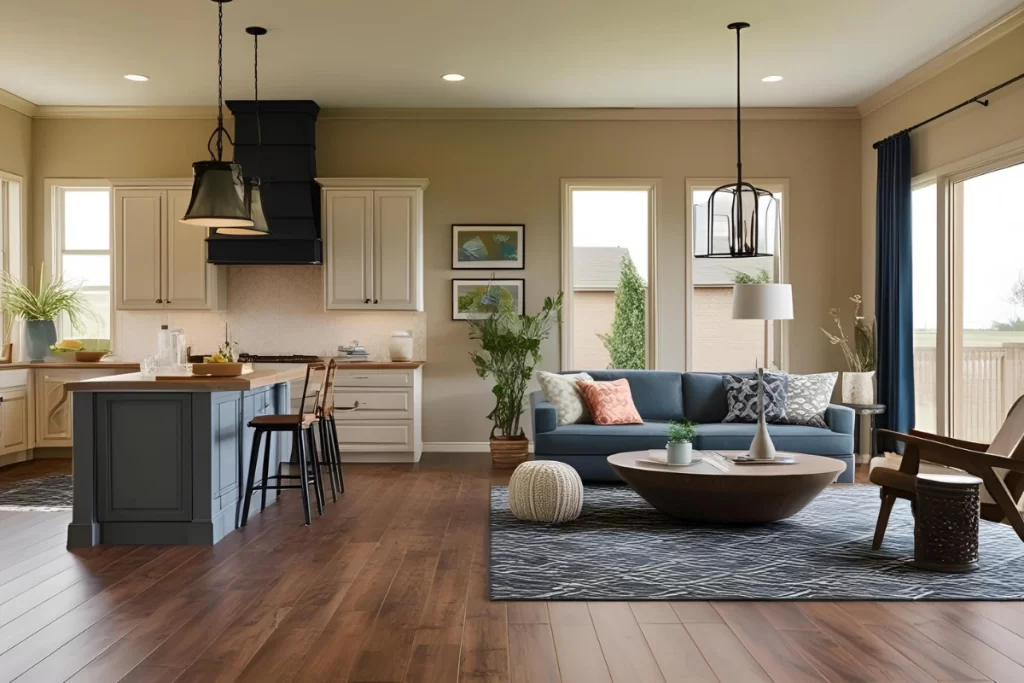
For many Wichita residents, the dream of living comfortably and independently in their own homes for as long as possible – a concept known as “aging in place” – is a powerful one. As our population ages, the desire to avoid the disruptions and costs associated with moving to assisted living facilities becomes even more pronounced. In fact, a 2024 AARP survey found that 75% of adults aged 50 and older prefer to stay in their current homes as they age. (Source: Empower). However, the reality is that many homes, especially older ones common in Wichita, are not inherently designed to accommodate changing mobility, vision, or cognitive needs.
At Wichita Home Works, the Sedgwick County area’s premier home remodeling company, we are dedicated to helping homeowners create spaces that are safe, functional, and comfortable for every stage of life. This guide explores essential accessible home modifications, delves into universal design principles, and answers common questions about aging in place solutions in Wichita.
- The Growing Need for Accessible Homes in Wichita
- Universal Design Principles: Designing for Everyone
- The Seven Principles of Universal Design provide a framework:
- Key Accessible Modifications for Wichita Homes
- Other Crucial Accessible Modifications:
- FAQs About Accessible Home Modifications in Wichita
- Wichita Home Works: Your Partner in Aging in Place
- Contact Wichita Home Works:
The Growing Need for Accessible Homes in Wichita
The demographics clearly show a shift. By 2034, the U.S. Census Bureau projects that there will be more people over 65 than under 18 for the first time in history. (Source: Empower). This “silver tsunami” means that homes must adapt to support a longer, healthier, and more independent life. Unfortunately, a 2020 report estimated that only 10% of homes in the United States are “aging ready,” possessing features like step-free entryways, a first-floor bedroom, and an accessible bathroom. (Source: myLifeSite). This highlights a significant gap that accessible modifications can bridge.
Universal Design Principles: Designing for Everyone
At the heart of accessible home modifications lies the philosophy of Universal Design. This concept advocates for creating products and environments that are usable by all people, to the greatest extent possible, without the need for adaptation or specialized design. It benefits not just seniors or those with disabilities, but families with young children, individuals recovering from injuries, and even delivery personnel.
The Seven Principles of Universal Design provide a framework:
- Equitable Use: The design is useful and marketable to people with diverse abilities. (e.g., a ramp alongside stairs).
- Flexibility in Use: The design accommodates a wide range of individual preferences and abilities. (e.g., adjustable-height countertops).
- Simple and Intuitive Use: Use of the design is easy to understand, regardless of the user’s experience, knowledge, language skills, or concentration level. (e.g., clearly marked controls).
- Perceptible Information: The design communicates necessary information effectively to the user, regardless of ambient conditions or the user’s sensory abilities. (e.g., contrasting colors for visibility).
- Tolerance for Error: The design minimizes hazards and the adverse consequences of accidental or unintended actions. (e.g., non-slip flooring).
- Low Physical Effort: The design can be used efficiently and comfortably with a minimum of fatigue. (e.g., lever door handles instead of knobs).
- Size and Space for Approach and Use: Appropriate size and space are provided for approach, reach, manipulation, and use regardless of user’s body size, posture, or mobility. (e.g., wider doorways). (Source: American Library Association)
By incorporating these principles, Wichita Home Works helps create homes that are not only accessible but also more comfortable and convenient for everyone.
Key Accessible Modifications for Wichita Homes
1. Grab Bars: Simple Yet Life-Saving
Falls are a leading cause of injury among older adults, with one-third of adults 65+ experiencing a fall each year, and two-thirds of those falls occurring in and around the house. (Source: Carex Health Brands). Bathrooms are particularly high-risk areas due to wet surfaces.
- Benefits: Grab bars provide crucial stability and support when getting in and out of the shower or tub, using the toilet, or navigating slippery surfaces. They significantly reduce the risk of slips and falls, promoting independence and reducing caregiver burden. 93% of remodelers in 2023 reported adding a grab bar to a bathroom, making it the most popular feature for aging-friendly homes. (Source: Carex Health Brands).
- Placement: Typically installed horizontally on the back wall of a shower/tub, vertically at the entrance, or near the toilet. They come in various lengths and finishes to blend seamlessly with your bathroom decor.
- Cost: Installation of grab bars typically ranges from $100 to $500 each, depending on the type and complexity of installation. (Source: Angi)
2. Ramp Installations: Smooth Transitions
Steps, even small ones, can become significant barriers for individuals using wheelchairs, walkers, or simply those with limited mobility.
- Benefits: Ramps eliminate barriers at entryways, into garages, or leading to decks and patios, providing smooth, safe access. They are essential for wheelchair users but also benefit parents with strollers, delivery personnel, or anyone carrying heavy items.
- Types: Ramps can be temporary (portable), modular (pre-fabricated sections), or custom-built from wood or concrete. The slope is critical for safety – the ADA recommends a 1:12 slope (1 inch of rise for every 12 inches of run).
- Considerations: Material choice (wood, aluminum, concrete), length required based on rise, and landing space at the top and bottom.
- Cost: Residential aluminum wheelchair ramps in Wichita typically range between $1,000 to $10,000, but can exceed $10,000 for unique configurations. (Source: Lifeway Mobility Wichita)
3. Wider Doorways: Enhancing Mobility
Standard interior doorways (often 28-30 inches wide) can be too narrow for wheelchairs, walkers, or even simply for comfortable passage with age-related mobility changes.
- Benefits: Widening doorways creates clear paths throughout the home, improving maneuverability and independence. It’s a fundamental aspect of creating a truly accessible space.
- Process: This involves removing the existing door and frame, expanding the rough opening in the wall, installing a wider header if necessary for structural support, and then installing a new wider door and frame. In some cases, a swing-clear hinge can add an extra 1-2 inches of clear width without full reconstruction.
- Considerations: Structural implications (especially in load-bearing walls), impact on adjacent rooms, and finishing details. The minimum doorway width recommended by the ADA is 32 inches, but 36 inches is often recommended for optimal wheelchair access. (Source: Number Analytics).
- Cost: Widening a doorway can range from $700 to $2,500 per doorway, depending on whether it’s a load-bearing wall and the finishing required. (Source: Angi)
Other Crucial Accessible Modifications:
- Curbless Showers: Eliminating the curb allows for easy roll-in access for wheelchairs and prevents tripping hazards.
- Lever Door Handles: Easier to operate than traditional doorknobs for those with arthritis or limited hand dexterity. 32% of aging-ready homes in a recent poll had lever-style door handles. (Source: myLifeSite).
- Enhanced Lighting: Brighter, well-distributed lighting reduces shadows and improves visibility, crucial for those with impaired vision. Consider motion-sensor lights in hallways and bathrooms.
- Non-Slip Flooring: Replacing slippery tile or polished surfaces with non-slip options like matte-finish tile, LVP, or textured concrete can greatly reduce fall risks.
- Adjustable Countertops/Sinks: In kitchens and bathrooms, adjustable-height counters or open-base sinks allow for comfortable use from a seated position.
- Stair Lifts: For multi-story homes, a stair lift can provide safe and convenient access between floors. Costs typically range from $1,500 to $16,000 depending on the type (straight vs. curved staircase). (Source: Angi, Lifeway Mobility Wichita)
FAQs About Accessible Home Modifications in Wichita
How much does it typically cost to make a home accessible in Wichita?
The cost varies significantly based on the scope. Simple upgrades like grab bars might cost a few hundred dollars. More extensive renovations, such as a full bathroom or kitchen remodel to be ADA-compliant, could range from $9,000 to $40,000. (Source: Angi). Overall, the national average for adapting a home for aging in place is $3,000 to $15,000. (Source: Empower).
Are there grants or financial assistance programs for accessible home modifications in Wichita?
Yes, several resources may be available. * Kansas Housing Resources Corporation (KHRC): Offers various programs, including the Community Services Block Grant (CSBG) and potentially others that can assist low-income Kansans with housing needs, which might include some home modifications. (Source: Kansas Housing Resources Corporation) * City of Wichita Homeownership Programs: While primarily for first-time homebuyers, some programs may have components related to home rehabilitation or accessibility for qualified residents. (Source: Wichita.gov) * Veterans Affairs (VA): The VA offers various grants for eligible veterans with service-connected disabilities to modify their homes. * Non-profits and Local Organizations: Organizations like Assistive Technology for Kansans and Disability Rights Center of Kansas may offer resources or connect individuals with funding options. (Source: MobilityWorks) * Medicaid Waivers: For eligible individuals, state Medicaid programs might offer waivers that cover home modifications. * Tax Deductions: Some medically necessary home modifications may be tax-deductible as medical expenses. Consult a tax professional.
Can accessible modifications look stylish?
Absolutely! Modern accessible design emphasizes blending functionality with aesthetics. Grab bars are available in sleek finishes, ramps can be integrated seamlessly into landscaping, and lever handles come in a variety of stylish designs. Wichita Home Works focuses on solutions that enhance both safety and your home’s overall beauty.
Do I need a permit for accessible modifications in Wichita?
Small modifications like installing grab bars or changing door handles generally do not require permits. However, larger projects such as installing ramps, widening doorways (especially in load-bearing walls), or significant bathroom/kitchen remodels will likely require permits from the City of Wichita’s Metropolitan Area Building and Construction Department (MABCD). Wichita Home Works will handle all necessary permits for your project.
Wichita Home Works: Your Partner in Aging in Place
Making your Wichita home accessible is an investment in your future, offering peace of mind, continued independence, and enhanced safety. It also appeals to a broader market if you ever decide to sell. At Wichita Home Works, we are not just home remodelers; we are partners in creating spaces that support your lifestyle at every stage. Our expertise in universal design and accessible solutions ensures that your home modifications are not only functional but also beautifully integrated into your living environment.
Contact Wichita Home Works:
Ready to explore accessible home modifications for your Wichita home? Contact Wichita Home Works today for a comprehensive consultation.