- Why is Warm Lighting Essential for a Cozy Kitchen?
- What is "Layered Lighting" and Why Do I Need It?
- What is the Best Type of Lighting for Working on Countertops?
- How Can I Make My Kitchen Look Bigger with Lighting?
- What Light Bulb Color Should I Use for a Cozy Glow?
- Frequently Asked Questions About Kitchen Lighting
- Conclusion and Next Steps
Why is Warm Lighting Essential for a Cozy Kitchen?
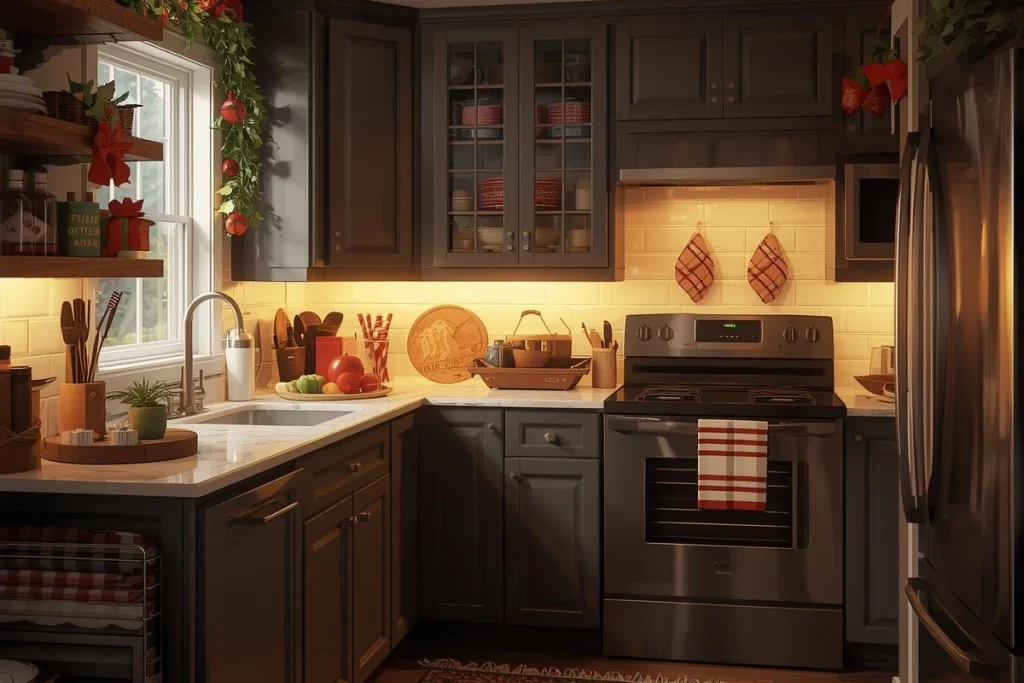
Warm lighting is essential for creating a cozy kitchen because it makes wood tones look richer, paint colors feel softer, and people feel more relaxed and welcome, which is perfect for holiday gatherings. Harsh, bright white light can make a kitchen feel sterile and cold, like a hospital or an office. As the days get shorter in Wichita during December, changing your light bulbs to a warm, soft tone is the fastest and easiest way to make your kitchen the heart of your home for the winter season. The right lighting is the most important element for setting a festive and comfortable mood.
Good lighting does more than just help you see; it changes the entire mood of the room. Warm light helps everyone feel comfortable, which is why restaurants and coffee shops often use soft lighting. When you gather family and friends for holiday cooking or celebrating, you want a gentle glow, not a glaring spotlight.
What is “Layered Lighting” and Why Do I Need It?
Layered lighting means using three different types of light—ambient, task, and accent—in your kitchen to eliminate harsh shadows and create depth and visual interest. A common mistake is relying on just one bright overhead fixture, which flattens the room and creates strong shadows where you work. By layering light, you can adjust the brightness for different activities, making the space more flexible and beautiful. This is a sign of a professional kitchen design.
The three layers are:
- Ambient Light (General): This is the main light that fills the entire room, often coming from recessed lights or a large ceiling fixture. It provides the base level of brightness.
- Task Light (Working): This is bright light pointed exactly where you need to work, such as over your countertops or sink. It is critical for safe cooking.
- Accent Light (Style): This light is used to highlight beautiful features, like a decorative backsplash, the texture of a stone wall, or the ceiling height, adding drama and cozy appeal.
What is the Best Type of Lighting for Working on Countertops?
The best type of lighting for safely and comfortably working on your countertops is task lighting, specifically under-cabinet LED strip lights, which remove the annoying shadows created by overhead lights. When you stand at your counter with a ceiling light behind you, your body creates a shadow right where you are trying to chop vegetables or mix ingredients. Under-cabinet lights fix this problem by shining light directly onto the workspace.
Modern LED strips are thin, energy-efficient, and easy to install. Many types are plug-and-play, meaning they don’t require complicated electrical wiring. These lights not only improve safety but also highlight your kitchen’s backsplash tile, making it look much better.
Hypothetical Example: A Wichita homeowner often found the corner of her kitchen counter to be dark, even with the main light on. After installing a simple under-cabinet LED light strip, the counter became perfectly bright and safe for using sharp knives, and she noticed the sparkle of her backsplash tile for the first time.
How Can I Make My Kitchen Look Bigger with Lighting?
You can make your kitchen look bigger by using accent lighting to draw the eye up or down, which makes the ceiling feel higher or the floor space seem larger. Lighting the vertical elements of your kitchen is a design trick that creates depth.
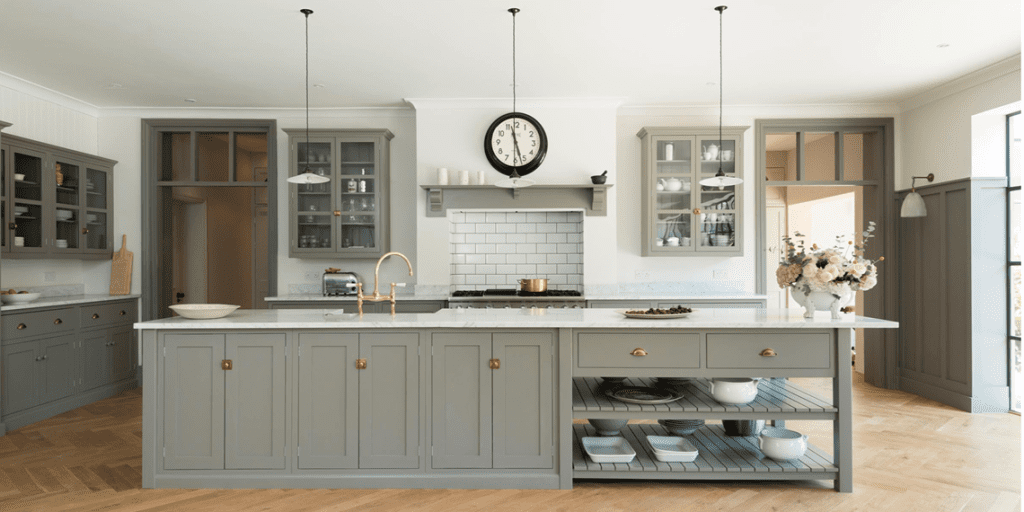
- Pendant Lights: By hanging stylish pendant lights over your kitchen island or peninsula, you draw the eye up, making the ceiling appear higher. Choose pendants that match your kitchen style (matte black for modern, brass for traditional) and use warm bulbs in them.
- Toe-Kick Lighting: Installing a hidden LED strip under the bottom cabinets (in the “toe-kick” space) creates a soft glow near the floor. This indirect light makes the cabinets look like they are floating, which gives the impression of a larger, more open floor area. This small detail is highly popular in modern kitchen designs.
Statistics show that well-lit homes, especially those using layered and accent lighting, are often perceived as having more usable square footage than poorly lit homes.
Source 1: Architectural Lighting Design Study
What Light Bulb Color Should I Use for a Cozy Glow?
You should always use bulbs labeled as “Soft White” or “Warm White,” which correspond to a color temperature of 2700 Kelvin (2700K), to achieve that desirable cozy glow. The Kelvin scale measures the color appearance of the light. Higher numbers (like $4000K$ to $5000K$) are “Daylight” or blue-white light, which is great for garages but terrible for cozy spaces. The $2700K$ light mimics the warm, yellow-orange glow of old incandescent bulbs or candlelight, making everything—from your wooden cutting board to your holiday centerpiece—look rich and inviting.
Switching out all your bulbs is an incredibly fast, low-cost update that has the biggest impact on the atmosphere of your kitchen and is essential for holiday decorating.
Frequently Asked Questions About Kitchen Lighting
Can I use dimmer switches on my kitchen lights?
Yes, you should definitely use dimmer switches on your kitchen lights! Dimmers are one of the best upgrades for creating a cozy, flexible space. During the day, you can turn your ambient and task lights up high for maximum brightness. In the evening, when you are eating dessert or entertaining guests, you can dim the lights to a soft glow, instantly making the room feel relaxed and intimate. Dimmers are simple to install and add a feeling of luxury.
What if my kitchen ceiling is too low for a fancy pendant light?
If your ceiling is low, you should avoid large, hanging pendant lights that might bump heads. Instead, focus on low-profile recessed lighting for ambient light and use flush-mount fixtures (lights that sit almost flat against the ceiling). You can still add accent lighting by using under-cabinet lights and toe-kick lighting, which draws the eye horizontally rather than vertically, avoiding the low-ceiling problem.
How do I know how many recessed lights my kitchen needs?
To make sure your kitchen is bright enough, lighting designers use a simple rule based on the amount of light (lumens) needed per square foot. For a kitchen, you typically need about 70 to 80 lumens per square foot. Your contractor or designer at Wichita Home Works can help you plan the perfect number and placement of recessed lights so you don’t have dark spots or too much glare.
Is LED lighting worth the extra cost over older bulbs?
Yes, LED lighting is absolutely worth the investment. While the upfront cost of an LED bulb is higher than an older incandescent bulb, LEDs use about $75\%$ less energy. This huge energy savings lowers your electricity bill, which is important during the winter when your lights are on longer. Furthermore, LEDs last 15 to 25 times longer than old bulbs, meaning you won’t have to climb a ladder to change a burnt-out bulb in the middle of holiday baking. The energy savings alone often pay for the cost of the bulbs in less than a year.
Conclusion and Next Steps
The right lighting is the easiest and most effective way to transform your kitchen from a simple workspace into a cozy, welcoming centerpiece for your holiday celebrations. By choosing warm-toned bulbs, layering your light sources, and adding smart task lighting under cabinets, you create a kitchen that is both functional and beautiful.
Don’t let harsh, cold lighting ruin the festive mood this season. The experienced team at Wichita Home Works is ready to help you plan and install the perfect layered lighting system for your kitchen.
Contact Wichita Home Works today to schedule your consultation and bring that warm, cozy glow to your home before the New Year!